
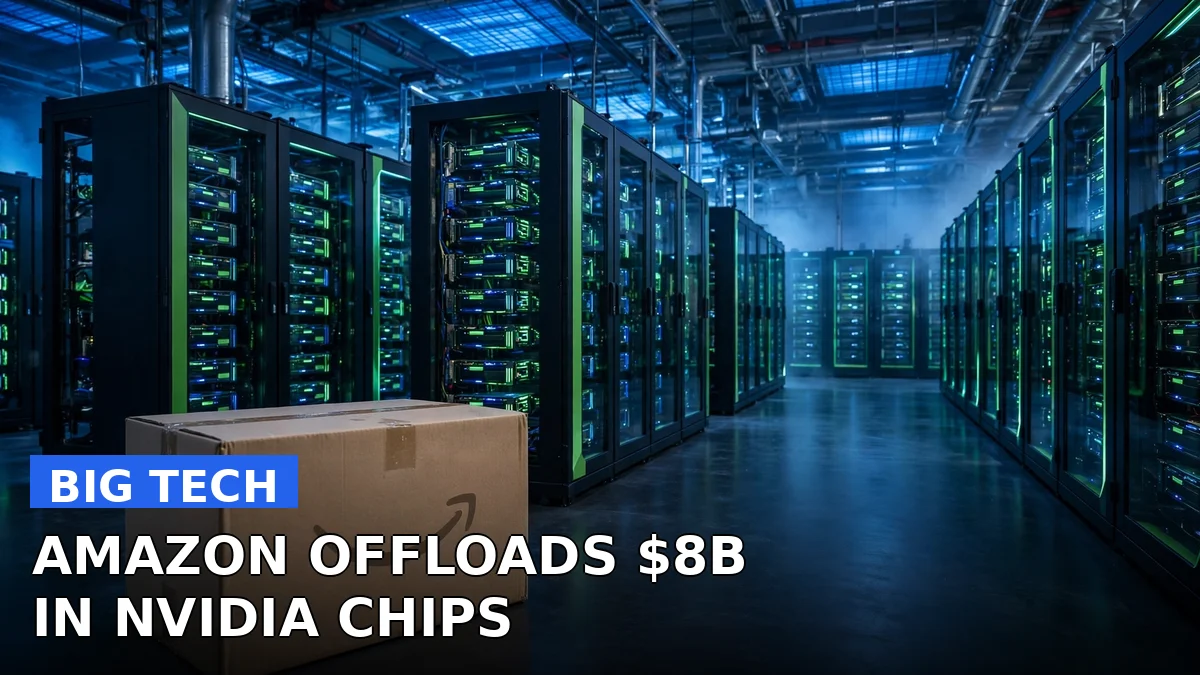
Amazon has found a buyer for the most expensive hardware problem in tech. The company is seeking to offload about $8 billion of advanced Nvidia chips to investors through a special-purpose vehicle, then lease the chips back for its own data centers, the Financial Times reported Friday.
The proposal, which Reuters also reported, would move thousands of Grace Blackwell chips — installed in more than a dozen US data centers across five states — into a vehicle backed by outside money. Amazon would then pay rent on hardware it currently owns outright.
Talks with investors have been underway for weeks, according to people familiar with the matter cited by the FT. Nothing has closed yet, and neither Amazon nor Nvidia responded to Reuters’ requests for comment.
How the Amazon Nvidia chips deal would work
The structure is straight out of the real estate playbook. Amazon would shift the chips into a special-purpose vehicle, an off-balance-sheet entity that raises money from outside investors, primarily through debt issuance. The cloud giant would then lease the hardware back from that vehicle to keep powering its AI infrastructure.
Amazon is also prepared to offer an equity stake of up to 10% in the vehicle, the FT reported, giving investors a slice of ownership on top of the debt returns.
The chips involved were bought or leased by Amazon and are already deployed — spread across data centers in Nevada and Virginia, among other states. In other words, this isn’t a forward purchase of future capacity. It’s a financial restructuring of hardware that’s already humming in Amazon’s server halls.
That detail matters. Sale-leasebacks on office buildings are old news; sale-leasebacks on $8 billion of most sought-after AI accelerators are something the industry hasn’t really tried before.
Why Amazon wants off its own balance sheet
This is about money, not machines. AI data centers are the most capital-hungry projects in corporate America right now, and the hyperscalers are feeling it.
Amazon’s cloud business, AWS, is racing Google, Microsoft, and Meta to build out AI infrastructure, and each new cluster of Nvidia’s top-tier chips runs into the hundreds of millions of dollars. The FT notes the deal would give Amazon a “more asset-light approach to its balance sheet” — corporate-speak for: we want to keep building without the debt looking quite so terrifying on our books.
It’s a clever way to keep spending. Amazon keeps the compute, investors get exposure to AI infrastructure with a creditworthy tenant paying rent, and Amazon’s reported capital expenditures shrink even as its data center footprint grows.
Whether the market bites depends on the math. Debt investors would need to believe the chips hold their value — and Grace Blackwell systems are Nvidia’s current flagship, so the collateral is at least top-shelf. But AI hardware depreciates fast; a generation lasts a couple of years before something better arrives. Pricing that risk is the whole deal.
The bigger picture
Watch the structure, not just the dollar figure. If this works, expect copycats.
Every hyperscaler faces the same squeeze: enormous AI capex, investors asking when it pays off, and balance sheets groaning under the weight of chips that depreciate faster than the buildings they’re bolted into. Amazon just sketched a template for funding the AI boom with other people’s money while keeping the compute for itself.
That’s not new in principle — airlines lease their planes, retailers lease their stores. What’s new is applying it at scale to the single most strategic asset in the AI race. Nvidia chips aren’t fungible office space; they’re the constraint on the entire industry.
The irony is thick. Amazon built AWS into a juggernaut by convincing everyone else to stop owning servers and rent compute instead. Now it’s renting its own servers back. The cloud, it turns out, works on other people’s money all the way down.
Frequently asked questions
Why is Amazon selling $8 billion in Nvidia chips to investors? Amazon wants an asset-light balance sheet. Moving the chips into a special-purpose vehicle shifts the capital cost to outside investors through debt, while Amazon keeps using the chips through a leaseback arrangement.
Which Nvidia chips is Amazon offloading? Thousands of Grace Blackwell chips, according to the Financial Times. They’re installed in more than a dozen US data centers across five states, including Nevada and Virginia.
Will Amazon stop using the Nvidia chips? No. Amazon would lease the chips back from the investor vehicle, so its data centers keep running on the same hardware. Only the ownership and financing structure changes.
Has the Amazon Nvidia chips deal closed? No. Amazon has been holding talks with investors in recent weeks to gauge interest, the FT reported. Amazon and Nvidia did not immediately respond to Reuters for comment.
Sources: Financial Times, Reuters, Channel News Asia, CNBC TV18